
Pallet Inverter

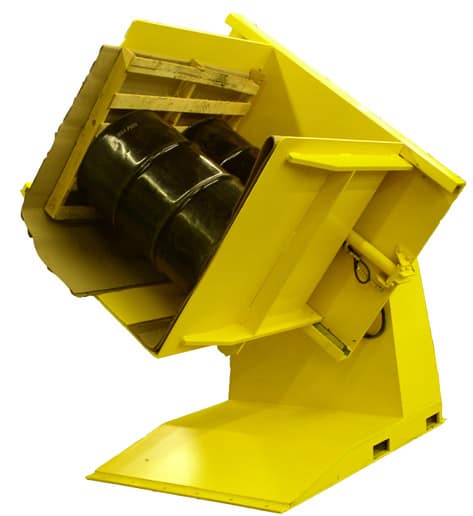
Product Features
Pallet Inverter Delivers Faster, Safer and More Efficient Load Handling
- 2,000 and 4,000 lb. load capacities with the ability to handle palletized loads up to 64 inches high and rotate them through 180°.
- A secure, uniform clamping system features parallel-moving clamping plates that travel along a rugged track to hold the load securely throughout the rotation process.
- Two-way fork pockets built into the self-supporting base make the pallet inverter easy to position, relocate, and integrate into different work areas.
- Simplifies damaged pallet replacement by allowing operators to remove a damaged pallet, box, or bag from beneath a fully loaded stack without manually unloading the entire load.
- Efficient load transfer allows complete loads to be transferred from one pallet or platform to another, reducing manual handling and minimizing downtime.
- Versatile material inversion can be used to rotate stacks of sheets, paperboard, rolls, and other materials, eliminating the need to handle individual items one at a time.
Improves workplace efficiency by reducing manual load handling, streamlining pallet exchange, and helping operators complete repetitive material handling tasks more efficiently.
Request Quote
Pallet Inverter for Safe and Efficient Load Transfer
When a damaged pallet needs to be replaced, a load must be transferred between pallet types, or a heavy stack needs to be inverted, manually handling the load can be time-consuming and create unnecessary safety risks. Air Technical Industries (ATI) Pallet Inverter provides a controlled way to rotate and transfer palletized loads while reducing the need for manual handling.
Designed for demanding warehouse, manufacturing, distribution, and material handling applications, the ATI Pallet Inverter rotates loads up to 180° and is available in 2,000 lb. and 4,000 lb. capacities. It can accommodate palletized loads up to 64 inches high, making it suitable for a wide range of products and materials.
For operations that require flexibility between work areas, a mobile pallet inverter can provide a practical approach to pallet exchange and load transfer without requiring the load to be manually broken down.
What Is a Pallet Inverter?
A pallet inverter is a material handling machine designed to securely grip and rotate a palletized load. Instead of unloading a pallet manually, operators can use the inverter to rotate the complete load, providing access to the original pallet or allowing the load to be transferred to another platform.
This capability is particularly useful when a pallet is damaged or contaminated and needs to be removed from underneath a fully loaded shipment. Rather than unloading and rebuilding the entire stack, the load can be secured, rotated, and transferred efficiently.
ATI’s pallet handling equipment can also be used for applications beyond conventional pallet exchange. Depending on the material and application, the equipment can help invert stacks of sheets, paperboard, rolls, and other products that would otherwise need to be handled individually.
How the ATI Pallet Inverter Works
The pallet inverter uses a clamping system to secure the load before rotation. Its clamping plates travel parallel and uniformly along a rugged track, helping maintain consistent contact with the load during the inversion process.
Once the load is properly positioned and secured, the machine can rotate it through 180°. This allows operators to access the pallet or platform beneath the load and complete the required transfer without manually breaking down and rebuilding the stack.
The self-supporting base incorporates two-way fork pockets, making it easier to position or relocate the equipment when required. This design gives facilities greater flexibility when integrating the machine into different areas of their material handling operation.
For facilities that need to move the equipment between workstations or handling areas, a portable pallet inverter can be considered when equipment mobility is an important part of the application.
Key Features of the ATI Pallet Inverter
1. 180° Load Rotation
The machine is designed to rotate palletized loads through 180°, making it possible to exchange pallets, transfer loads, or reposition products without manually unloading the entire stack.
2. 2,000 lb. and 4,000 lb. Capacities
ATI offers pallet inverter models in 2,000 lb. and 4,000 lb. capacities to accommodate different load-handling requirements. Selecting the appropriate model depends on the maximum load weight, dimensions, and operating conditions of the application.
3. Handles Loads Up to 64 Inches High
The equipment can accommodate palletized loads up to 64 inches high, providing flexibility for facilities that handle taller or larger loads.
4. Parallel Clamping Plates
The clamping plates move parallel and uniformly on a rugged track to help keep the load secure throughout the rotation. Proper load securing is an important part of safely performing pallet exchange and inversion operations.
5. Two-Way Fork Pockets
The self-supporting base includes two-way fork pockets for easier positioning or relocation. This feature can be particularly useful when the equipment needs to serve multiple work areas.
6. Flexible Load Handling
In addition to pallet exchange, the machine can be used to transfer loads between pallets or platforms and invert certain stacks of material. This makes it a versatile option for operations that routinely handle heavy or bulky products.
Common Applications for Pallet Inverters
A pallet inverter machine can solve several recurring material handling challenges across industrial environments.
Pallet exchange: When a wooden pallet is damaged, contaminated, or unsuitable for the next stage of handling, the load can be transferred to another pallet without completely unloading the shipment.
Food and beverage handling: Facilities may need to transfer products between pallets as materials move between receiving, storage, production, and distribution areas. Pallet inversion can simplify these transfers while reducing manual handling.
Pharmaceutical and sanitary applications: Operations that require specific pallet types can use pallet inverters to transfer loads between platforms while keeping the product stack intact.
Manufacturing: Manufacturers can use pallet inverters to reposition heavy loads and transfer products between pallets or platforms during production and storage processes.
Paper, sheet, and roll handling: The equipment can also be used to invert stacks of sheets, paperboard, rolls, and similar materials rather than turning individual pieces one at a time.
Why Use a Pallet Inverter Instead of Manual Load Handling?
Manually unloading and rebuilding a heavy pallet takes time and introduces additional handling steps. For repetitive operations, these extra steps can affect productivity and increase physical demands on employees.
A pallet inverter simplifies the process by allowing the load to remain together during rotation. This can help reduce handling time, minimize unnecessary product movement, and make pallet exchange more efficient.
It can also reduce reliance on forklifts, cranes, or other equipment for tasks that require rotating a complete load. ATI’s pallet inverter selection guidance notes that purpose-built inverters can help reduce product damage, improve efficiency, and reduce workplace risks associated with manually rotating heavy loads.
When evaluating a pallet inverter manufacturer, facilities should consider factors such as load capacity, load dimensions, rotation requirements, clamping method, mobility, and the specific operating environment.
A Reliable Solution for Pallet Handling Challenges
The ATI Pallet Inverter provides a practical solution for operations that regularly need to exchange pallets, transfer loads, or invert heavy stacks of material. With 180° rotation, 2,000 lb. and 4,000 lb. models, support for loads up to 64 inches high, secure parallel clamping, and two-way fork pockets, it is designed to make demanding pallet-handling tasks more efficient.
For warehouses and manufacturing facilities looking to reduce manual load handling and streamline pallet exchange, investing in the right pallet inverter can improve workflow while supporting safer material handling practices.
Request a Pallet Inverter Solution from ATI
Every material handling application has different load dimensions, weights, operating conditions, and workflow requirements. Air Technical Industries can help determine whether a standard pallet inverter or a modified solution is the right fit for your operation.
Contact Air Technical Industries today to discuss your application, request a quote or speak with an ATI engineer about your pallet handling requirements.
Frequently Asked Questions (FAQ’s)
1. What is a pallet inverter used for?
A pallet inverter is used to rotate and transfer palletized loads, replace damaged pallets, and remove boxes or bags from underneath a full load without manually unloading the entire stack.
2. How much weight can the ATI Pallet Inverter handle?
ATI Pallet Inverter models are available in 2,000 lb. and 4,000 lb. capacities, providing options for different industrial load-handling requirements.
3. Can a pallet inverter rotate a load 180 degrees?
Yes. The ATI Pallet Inverter can rotate secured palletized loads through 180°, making it easier to exchange pallets, transfer loads, or invert materials.
4. What is the maximum load height for the pallet inverter?
The ATI Pallet Inverter can accommodate palletized loads up to 64 inches high, depending on the specific model and application requirements.
5. How does a pallet inverter improve workplace efficiency?
A pallet inverter reduces the need for manual unloading and rebuilding of heavy loads. It can streamline pallet exchange and load transfer, helping save handling time, reduce physical effort, and improve overall worker efficiency.