
The U.S. manufacturing industry lost approximately 1.4 million jobs during the pandemic. Since then, the industry has made strides to address job vacancies. As of Feb 2025, the latest data shows that there are 8 million job openings in the U.S. but only 6.8 million workers are unemployed. These labor market challenges are anticipated to continue into the next few decades, as our nation’s workforce ages and employers create new jobs (1).
With not enough workers, higher labor costs and the inflationary impacts of raw materials, manufacturing companies are prioritizing the well-being of personnel and evaluating productivity enhancements.
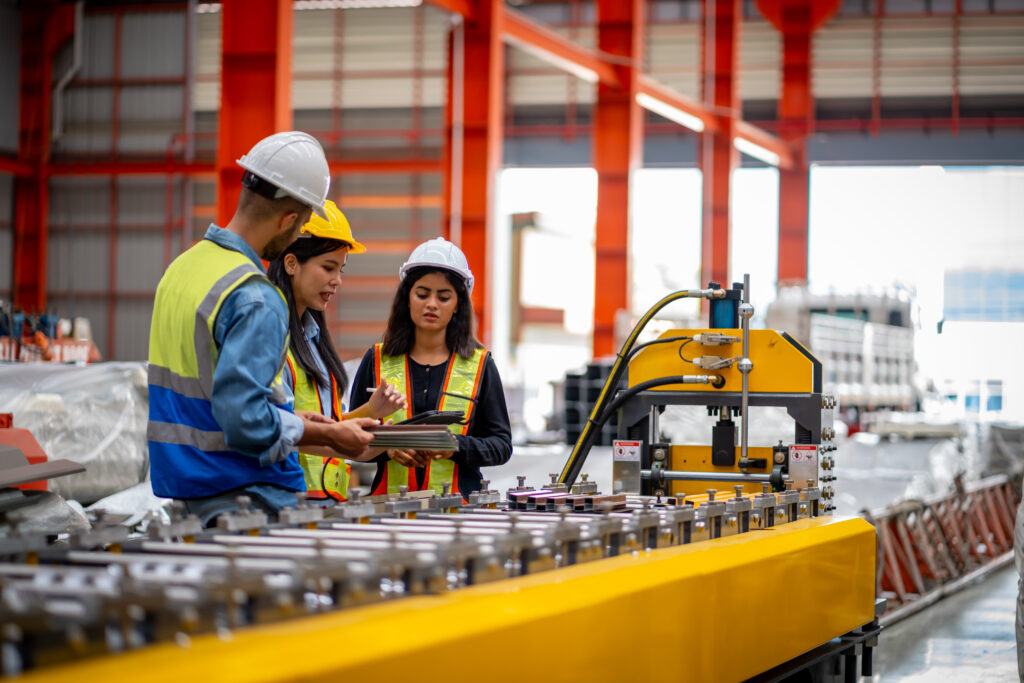
Safety and Productivity
Many companies are committed to keeping employees safe in the workplace and are proactively cultivating a safety and healthy culture. This positive investment in personnel, boosts employee morale, helps motivate productivity, and also attracts other workers to the organization.
Workplace accidents or occupational accidents can lead to irreversible consequences that directly affect the worker’s quality of life. Effective safety management is seen as an important and critical investment to protect employees, and reduce accidents and injuries.
Work Injury Costs
Injuries are expensive, and the reality is that injuries can occur when occupational risks and hazards are not averted in the workplace.
According to the U.S. National Safety Council (NSC) the true cost to the nation, employers, and individuals of work-related deaths and injuries is much greater than the cost of workers’ compensation insurance alone. The total cost of work injuries in 2022 was $167.0 billion. This figure includes wage and productivity losses of $50.7 billion, medical expenses of $37.6 billion, and administrative of $54.4 billion. This total also includes employers’ uninsured costs of $15.0 billion, including the value of time lost by workers (2).
Investing in a Safety Culture
Employers that invest in workplace safety and health can expect to reduce fatalities, injuries, and illnesses. This will result in cost savings in a variety of areas, such as lowering workers’ compensation costs and medical expenses, avoiding OSHA penalties, and reducing costs to train replacement employees and conduct accident investigations. In addition, employers often find that changes made to improve workplace safety and health can result in significant improvements to their organization’s productivity and financial performance. Check out the OSHA Quick Start Checklist (3).
Material Handling & Safety
According to the NSC over 60% (see chart of Manufacturing Top 5 Injury Causes) of workplace injuries are related to improper equipment contact and overexertion. Factory flow and process integrated material handling can mitigate injury risks. Several aspects should be considered in the flow and process evaluation, such as: performance objectives, types of equipment, process optimization, ergonomics, unit loads, space utilization, system integration, environmental impact, among others dependent on application needs.

About Air Technical Industries
For over 60 years, ATI has remained committed to producing ergonomic products and solutions that help our customers and their employees operate safely, efficiently, and sustainably. Our customers count on our ingenuity to solve complex and challenging material handling applications, whether for an international space station, a nuclear power plant, automotive plant or a military base, among dozens of other manufacturing applications.
Do you have a lifting or handling situation that you’re not 100% sure how to handle? Contact one of ATI’s Material Handling Specialist or Challenge Us to solve it. About Us – Air Technical Industries