
Overhead cranes are the primary pillars of material handling activities in many industrial environments. They are essential due to their strength, stability, and capacity to move large objects across large distances. But they do have certain limits. Dead zones areas that the overhead crane cannot reach can cause workflow disruptions, decreased productivity, and safety hazards, whether as a result of fixed tracks, architectural limitations, or hook access problems.
Fortunately, these gaps can be filled with complimentary lifting solutions. Air Technical Industries provides cutting-edge machinery that complements overhead cranes to remove dead zones and enhance material handling procedures.
What Is an Overhead Crane?
An overhead crane is a heavy-duty lifting system commonly used in manufacturing, warehouses, and industrial facilities. Mounted to the building’s ceiling structure, it moves loads horizontally and vertically using a hoist, bridge, and runway rails. Designed for high-capacity lifting and repetitive material handling, overhead cranes help streamline operations and reduce manual labor.
However, despite their advantages, overhead cranes are not without limitations.
Understanding Overhead Crane Limitations
Overhead cranes are powerful tools for industrial lifting, but even the best systems face limitations that can impact productivity and safety.
- Limited Reach
Operating on fixed rails or beams, overhead cranes can’t access corners, tight alcoves, or areas behind columns creating unreachable “dead zones” in many layouts.
- Single-Hook Bottleneck
With only one hook in use at a time, multitasking is impossible. This often causes delays when multiple teams rely on the same crane, reducing workflow efficiency.
- Rigidity in Layout
Once installed, overhead cranes are difficult and costly to modify. Any layout change or process expansion may require expensive structural updates or crane extensions. - Obstruction Conflicts
Despite being elevated, cranes can still be blocked by tall equipment, HVAC ducts, or mezzanines. These obstacles create blind spots and increase the risk of collisions.
How Our Complementary Solutions Fill the Gaps
Our range of specialized lifting products is designed to seamlessly support and extend the capabilities of overhead crane systems. Here’s how:
1. Reversible Boom Cranes
This versatile unit offers precision lifting and placement in tight spaces. With manual rotation, hydraulic lifting, and telescoping boom extensions, it’s ideal for navigating dead zones or around machinery and building features that restrict overhead access.
Key Benefits:
- High maneuverability with 90° steering
- Reach around or over obstructions
- Fully powered or manual options

2. Jib Master Cranes
Transform any forklift into a mobile crane with this easy-to-mount boom. Jib Master Cranes offer flexible load handling with multiple lifting points and adjustable boom lengths making them perfect for reaching under mezzanines, into containers, or around barriers.
Key Benefits:
- Cost-effective extension of your forklift fleet
- Adjustable lifting range and angles
- Fast deployment in constrained spaces

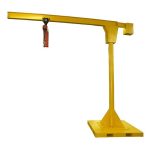
3. Portable Jib Cranes
These heavy-duty and versatile cranes can be placed in any location, giving you full coverage in zones where your overhead system can’t reach. With an optional electric hoist and a robust steel base, they deliver precise lifting wherever it’s needed.
Key Benefits:
- No installation required
- Supports up to 2,000 lbs capacity
- Great for workstation lifting or temporary job sites
Why Use Both Systems in Tandem?
Overhead cranes provide unmatched strength and centralized lifting capabilities—but when paired with complementary solutions like Reversible Boom Cranes, Jib Master Forklift Cranes, or Portable Jib Cranes, you unlock a new level of operational flexibility and efficiency. Here’s why using both systems together makes strategic sense:
- Enhanced Workflow Flexibility
While overhead cranes handle large, centralized movements, mobile and adjustable lifting tools can be deployed in tight or irregular areas such as around machinery, near walls, or between workstations. This enables faster, more efficient transfers without the need to reroute the main crane system. - Increased Uptime
Downtime on an overhead crane whether due to maintenance, overload, or availability can paralyze an entire workflow. By using complementary cranes as secondary lifting tools, you ensure material flow continues uninterrupted, minimizing costly delays - Improved Safety
Manual lifting in crane dead zones often leads to strained backs and workplace injuries. Supplementary lifting equipment allows operators to safely manage loads in constrained or awkward spaces, reducing physical strain and improving compliance with safety protocols. - Cost Efficiency
Instead of expanding or modifying your overhead system which can be expensive and time-consuming mobile cranes provide a cost-effective way to enhance coverage. These tools are easy to deploy, reposition, and scale as your facility evolves.
Real-World Success: From Constraint to Capability
One of our industrial clients encountered a frequent problem: ceiling-mounted HVAC and support beams prevented their overhead crane from reaching a recently enlarged production area. They used one Reversible Boom Crane and two Portable Jib Cranes rather of spending money on a complete crane extension.
The outcome? There is no downtime, loading times are shortened by 35%, and the material handling workflow is safer and more responsive. Large, central movements are now handled by their floor operators using the overhead crane, while equipment transfer and spot lifting are handled by the complementary cranes.
Summary
Overhead cranes are powerful, but they’re not omnipresent. The real key to productivity lies in using the right tool for the right job and that means equipping your facility with agile, complementary lifting solutions that extend your reach and flexibility.
We design our Reversible Boom Cranes, Jib Master Forklift Cranes, and Portable Jib Cranes to complement—not conflict with your current equipment. Whether you’re handling awkward loads, dealing with tight spaces, or simply trying to reduce downtime, we have the right tool to keep your workflow moving.
Ready to Overcome Overhead Crane Dead Zones?
Discover how innovative complementary lifting solutions can help you maximize coverage, enhance productivity, and eliminate costly downtime.
Download our exclusive white paper to learn practical strategies, real-world applications, and equipment recommendations that bridge the gaps traditional cranes can’t reach.
Frequently Asked Questions (FAQ’s)
1. What are overhead crane dead zones?
Overhead crane dead zones are areas a crane cannot effectively reach due to fixed runway tracks, structural obstructions, machinery or limited hook access. These inaccessible areas can disrupt material flow and may require complementary lifting equipment.
2. How can you eliminate dead zones in an overhead crane system?
You can address overhead crane dead zones by adding complementary lifting equipment, such as Reversible Boom Cranes, Portable Jib Cranes, or Jib Master Forklift Cranes. The right solution depends on load capacity, reach, available floor space, and facility layout.
3. What are the best alternatives to extending an overhead crane?
Reversible Boom Cranes, Portable Jib Cranes, and forklift-mounted Jib Master Cranes can help handle loads beyond an overhead crane’s reach. These solutions may reduce the need for costly runway extensions or structural modifications, depending on the application.
4. Which type of crane is best for lifting loads in tight industrial spaces?
The best option depends on the lifting requirements. Reversible Boom Cranes offer maneuverability around obstructions, Portable Jib Cranes support localized workstation lifting, and Jib Master Forklift Cranes extend the lifting capabilities of compatible forklifts.
5. What safety factors should be considered when using complementary lifting equipment with overhead cranes?
Consider rated load capacity, load stability, floor conditions, overhead clearance, equipment travel paths, and operator training. Follow applicable OSHA requirements, relevant ASME standards, and manufacturer instructions to help ensure safe operation.
