
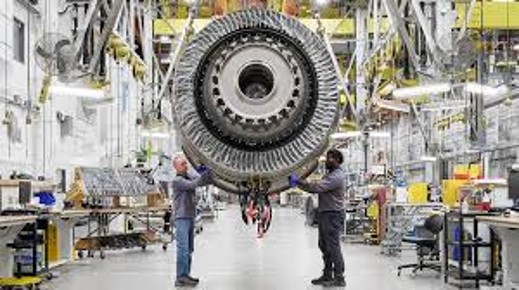
In aerospace manufacturing, every minute of downtime can impact production schedules, delay deliveries, and increase operational costs. Whether assembling aircraft structures, handling engines, positioning fuselage sections, or supporting maintenance operations, manufacturers depend on efficient material handling systems to keep operations moving smoothly.
Traditional fixed lifting systems have long been used in aerospace facilities, but modern manufacturers are increasingly turning to portable lifting solutions to improve flexibility, reduce bottlenecks, and minimize costly downtime. Portable cranes, mobile lifting devices, battery-powered floor cranes, portable jib cranes, and custom lifting equipment provide the mobility and adaptability needed in today’s fast-paced aerospace environment.
As aerospace manufacturers continue to adopt lean manufacturing practices and flexible production models, portable lifting solutions have become an essential tool for improving productivity and operational efficiency. Aerospace facilities increasingly require flexible lifting equipment that can be quickly repositioned, support maintenance operations, and safely handle high-value components with precision.
The High Cost of Downtime in Aerospace Manufacturing
Unlike many manufacturing industries, aerospace production involves highly specialized components, strict quality requirements, and complex assembly processes. A delay in one production area can quickly affect multiple departments and disrupt the entire manufacturing workflow.
Common causes of downtime include:
- Equipment availability issues
- Inefficient material movement
- Maintenance-related delays
- Production line bottlenecks
- Manual handling limitations
- Workspace constraints
- Component positioning challenges
Because aerospace parts are often large, expensive, and difficult to maneuver, even minor delays during lifting and positioning operations can significantly impact productivity.
Why Portable Lifting Solutions Are Gaining Popularity
Portable lifting equipment provides a level of flexibility that fixed systems cannot always offer. Instead of moving materials to a dedicated lifting station, the lifting equipment can be brought directly to the work area.
This flexibility allows aerospace manufacturers to:
- Reduce unnecessary material movement
- Improve workflow efficiency
- Support multiple workstations
- Increase equipment utilization
- Adapt quickly to changing production requirements
- Reduce waiting times between operations
As aerospace facilities continue to expand maintenance, repair, and overhaul (MRO) operations, portable lifting systems have become especially valuable for supporting dynamic work environments where equipment must move between different aircraft, work cells, and production zones.
5 Ways Portable Lifting Solutions Reduce Downtime
1. Faster Material Movement Across the Facility
Aerospace manufacturing facilities often handle large structures, engines, landing gear components, and specialized assemblies. Waiting for fixed lifting equipment can create delays and production bottlenecks.
Portable lifting solutions eliminate this challenge by allowing operators to move lifting equipment directly to the required location. This reduces transportation time and keeps production flowing without interruption.
The result is faster material handling and improved operational efficiency throughout the facility.
2. Improved Flexibility for Changing Production Needs
Modern aerospace manufacturing environments rarely remain static. Production schedules, assembly processes, and maintenance requirements frequently change.
Portable lifting equipment can be repositioned quickly to support new projects, temporary workstations, or changing production layouts. This flexibility helps manufacturers respond faster to operational demands without investing in costly infrastructure modifications.
For facilities supporting both manufacturing and MRO operations, this adaptability is particularly valuable.
3. Reduced Maintenance-Related Downtime
Many modern portable lifting systems feature battery-powered operation, simplified maintenance requirements, and advanced engineering designed for reliability.
Compared with older hydraulic systems, newer electric lifting equipment often requires less maintenance and experiences fewer unexpected failures. Some smart lifting technologies now include diagnostics and monitoring capabilities that help identify issues before they lead to equipment downtime.
By reducing maintenance interruptions, aerospace facilities can keep critical operations running consistently.
4. Enhanced Worker Productivity and Ergonomics
Manual handling remains one of the leading causes of workplace inefficiency. When employees spend excessive time positioning, lifting, or maneuvering heavy components, productivity suffers.
Portable lifting solutions help eliminate unnecessary manual lifting while improving ergonomics and reducing operator fatigue. Workers can position aerospace components more accurately and efficiently, allowing assembly and maintenance tasks to be completed faster. Improved lifting and positioning systems also contribute to safer operations and more consistent production output.
5. Better Support for High-Value Aerospace Components
Aircraft components require precise handling. Damage caused by improper lifting can result in costly repairs, production delays, and quality issues.
Portable lifting equipment designed specifically for aerospace applications helps operators maintain precise control during lifting and positioning operations. Modern systems provide improved maneuverability, load control, and access in confined workspaces where traditional equipment may be impractical. Aerospace manufacturers increasingly rely on specialized lifting solutions to safely handle engines, avionics, composite structures, and other high-value components.
Key Aerospace Applications for Portable Lifting Solutions
Portable lifting equipment supports a wide range of aerospace operations, including:
- Aircraft assembly lines
- Aerospace component manufacturing
- Engine installation and removal
- Maintenance, Repair, and Overhaul (MRO)
- Composite material handling
- Tool and fixture positioning
- Aerospace research and development facilities
- Defense and military aviation operations
Because these applications often involve varying load sizes and workspace requirements, portable systems provide greater versatility than many fixed alternatives.
Choosing the Right Portable Lifting Solution
Selecting the best lifting solution depends on several factors:
- Component size and weight
- Frequency of lifting operations
- Facility layout
- Available workspace
- Safety requirements
- Future scalability needs
Many aerospace manufacturers are now adopting a combination of portable cranes, portable jib cranes, battery-powered floor cranes, lift tables, and custom-engineered lifting systems to create a more flexible and efficient material handling strategy.
Conclusion
Reducing downtime remains a top priority for aerospace manufacturers seeking to improve productivity, control costs, and maintain competitive advantages. Portable lifting solutions provide the flexibility, mobility, and efficiency required to support today’s aerospace manufacturing and MRO environments.
By enabling faster material movement, reducing maintenance interruptions, improving ergonomics, and supporting precise component handling, portable lifting equipment helps aerospace facilities streamline operations while minimizing costly production delays.
As aerospace manufacturing continues to evolve, investing in modern portable lifting solutions is becoming an increasingly effective strategy for maximizing uptime and improving operational performance.
Request a Quote
Looking for a portable lifting solution designed specifically for your aerospace manufacturing or MRO operation?
Air Technical Industries engineers and manufactures custom lifting equipment, portable cranes, lift tables, and aerospace material handling solutions that improve safety, efficiency, and productivity.
Contact Air Technical Industries today to discuss your application and request a customized quote from our engineering team..
Frequently Asked Questions (FAQ’s)
1. How do portable lifting solutions reduce downtime in aerospace manufacturing?
Portable lifting solutions reduce downtime by bringing lifting capability directly to the work area. This minimizes unnecessary material movement, reduces waiting for fixed lifting equipment, and allows operators to position components more efficiently. Mobile equipment can also be repositioned as production requirements change, helping aerospace manufacturers maintain workflow continuity.
2. What types of portable lifting equipment are used in aerospace manufacturing?
Aerospace facilities may use portable cranes, mobile floor cranes, portable jib cranes, battery-powered lifting equipment, mobile lift tables, and custom-engineered lifting systems. The appropriate equipment depends on factors such as load capacity, lifting height, component dimensions, workspace limitations, mobility requirements, and the specific manufacturing or MRO application.
3. Why is portable lifting equipment important for aerospace MRO operations?
Portable lifting equipment provides the mobility needed for maintenance, repair, and overhaul (MRO) operations where lifting tasks may occur in different work areas. Operators can move the equipment to aircraft, engines, components, or tooling instead of transporting heavy parts to a fixed lifting station. This can improve workflow efficiency and reduce delays during maintenance operations.
4. What should aerospace manufacturers consider when selecting portable lifting equipment?
Aerospace manufacturers should consider load capacity, component size and weight, required lifting height and reach, workspace constraints, floor conditions, frequency of use, mobility requirements, power source, operator access, and safety requirements. For specialized aerospace applications, custom-engineered lifting equipment may provide a better fit than standard equipment.
5. Can portable lifting equipment be customized for aerospace applications?
Yes. Portable lifting equipment can be customized to meet specific aerospace manufacturing and MRO requirements. Customization may include load capacity, lifting height, boom reach, platform or fixture dimensions, mobility, controls, and other application-specific requirements. Custom solutions are particularly useful when handling specialized components or working within confined or non-standard spaces.
6. What are the best options for lightweight gear solutions in aerospace engineering?
The best options include portable lifting equipment, mobile hydraulic floor cranes, compact jib cranes, and ergonomic lifting systems. These solutions help aerospace manufacturers move aircraft components efficiently while improving workspace flexibility, reducing manual handling, and minimizing production downtime.
7. Why are portable lifting solutions important in aerospace engineering?
Portable lifting solutions are important in aerospace engineering because they allow manufacturers to move and position aircraft components across different workstations without depending entirely on fixed overhead lifting systems. Mobile cranes, portable jib cranes, and hydraulic lifting equipment help improve material handling flexibility, reduce manual handling, and support efficient aircraft assembly and maintenance operations.
8. How do manufacturers choose lightweight and portable lifting equipment for aerospace applications?
Manufacturers should evaluate the equipment’s load capacity, overall dimensions, mobility, lifting height, stability, and compatibility with their workspace. The equipment must safely handle the weight and dimensions of aerospace components while allowing operators to maneuver loads through production and maintenance areas. Application-specific requirements should guide the final equipment selection.

Vida Novak is the President of Air Technical Industries (ATI). With his over 25-year tenure at ATI Vida has earned progressive career advancements with increasing levels of responsibilities, including in engineering, technical sales, and operations management. Vida has gain keen insights into complex industrial material handling challenges. An endless number of manufacturers count on ATI’s ingenuity to solve complex and challenging material handling issues, whether for an international space station, a nuclear power plant, automotive plant, food factory, or a military base, among many others.